Enhancing Creative Projects with Watercolor Vase of Flowers Illustration
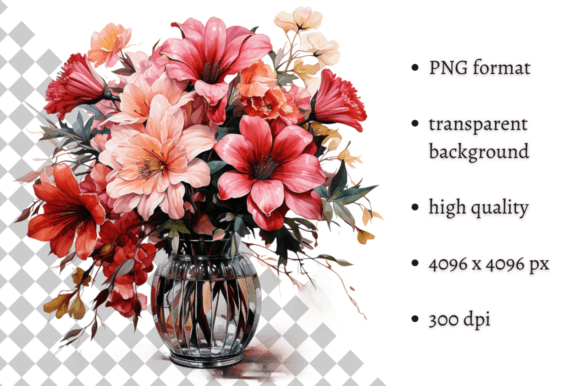
For crafters and designers seeking to elevate their visual creations, the Watercolor Vase of Flowers Illustration offers a versatile and aesthetically pleasing option. This high-resolution PNG image features a delicate yet vibrant arrangement of flowers in a traditional vase, rendered in a soft watercolor style. Its transparent background allows for seamless integration into a wide range of digital and physical projects, making it a practical choice for those who value both beauty and functionality in design elements.
Distinctive Features of the Watercolor Vase of Flowers Illustration
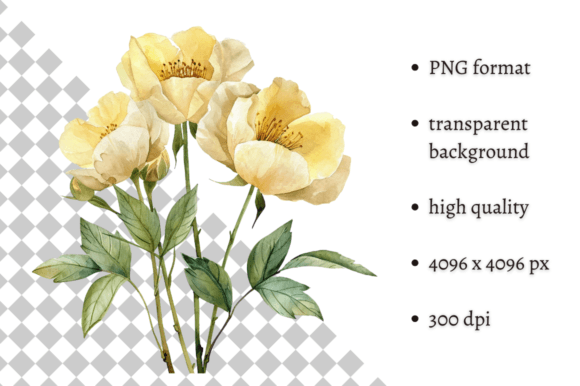
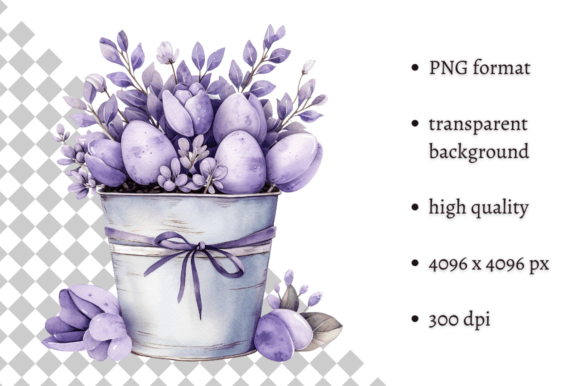
Unlike vector-based floral graphics or photographic images, the Watercolor Vase of Flowers Illustration captures the organic, hand-painted texture of traditional watercolor art. This gives it a unique charm that resonates with audiences looking for a more artistic, less digital aesthetic. The 300 dpi resolution and 4096 x 4096 pixel dimensions ensure that the illustration remains crisp and detailed, even when scaled for larger formats such as posters or greeting cards.
Its transparent background further enhances usability, allowing creators to layer the image over different backgrounds without needing to edit or mask edges. This is particularly beneficial for digital scrapbooking, invitations, and web graphics where a clean, professional look is essential.
Comparing Watercolor Vase of Flowers Illustration to Similar Options
When evaluating visual assets for creative projects, users often consider a variety of formats, including vector graphics, stock photos, and hand-drawn illustrations. Each option has its own set of advantages and limitations:
- Vector graphics offer scalability without loss of quality, but may lack the soft, textured appearance of watercolor illustrations.
- Photographic images provide realism but may not blend as naturally into handcrafted or whimsical designs.
- Hand-drawn clipart can offer a similar artistic feel, though it may vary in resolution and consistency compared to professionally rendered illustrations.
The Watercolor Vase of Flowers Illustration strikes a balance between artistic expression and technical quality, making it a strong contender for those who want a polished yet organic visual element.
Strengths and Limitations
One of the key strengths of this illustration is its adaptability across mediums. Whether used in digital design software or printed onto handmade cards, the watercolor aesthetic maintains its integrity. The vibrant color palette ensures visual appeal, while the high resolution supports both small and large-scale applications.
However, like any design asset, there are tradeoffs. While the watercolor style is well-suited for invitations, scrapbooks, and greeting cards, it may not be ideal for more minimalist or modern design contexts where clean lines and flat colors are preferred. Additionally, because it is a static image rather than a scalable vector, adjustments to individual elements (such as resizing specific flowers) may require additional editing work.
Best Use Cases for Watercolor Vase of Flowers Illustration
This type of illustration excels in creative environments where a warm, inviting aesthetic is desired. Some practical applications include:
- Wedding and event invitations – The floral motif adds a touch of elegance and personalization.
- Digital scrapbooking – Layering the image over patterned paper or backgrounds creates depth and visual interest.
- Junk journaling and mixed media art – The watercolor style complements hand-painted or vintage-style pages.
- Print-on-demand products – From mugs to greeting cards, the image can be easily adapted for commercial use.
For those who frequently work in these areas, the Watercolor Vase of Flowers Illustration can become a go-to element that enhances both digital and print-based projects.
When to Consider Alternatives
While this illustration offers many benefits, it may not be the best fit for every project. For example, if a design requires a more geometric or modern aesthetic, vector-based floral graphics or line art may be more appropriate. Similarly, if the goal is to create a highly customized arrangement—such as changing individual flower types or colors—working with separate floral elements or vector layers may offer greater flexibility.
Additionally, users who are new to design software may find that working with high-resolution PNGs requires more processing power or storage space than they are comfortable managing. In such cases, lighter file formats or simplified clipart may be more suitable.
Practical Comparisons and Real-World Examples
To better understand how the Watercolor Vase of Flowers Illustration fits into the broader landscape of design assets, consider the following comparisons:
- Watercolor Illustration vs. Vector Floral Graphics – A vector floral set may allow for more precise editing and color changes, but the watercolor version offers a softer, more organic appearance that feels handcrafted.
- Watercolor Illustration vs. Stock Photography – A high-quality photo of a real vase of flowers can be visually striking, but may not integrate as seamlessly into layered digital designs due to background limitations and lack of artistic stylization.
- Watercolor Illustration vs. Hand-drawn Clipart – Hand-drawn sets can offer a unique personality, but may vary in resolution and color consistency. The Watercolor Vase of Flowers Illustration, being professionally rendered, ensures uniformity and clarity.
In real-world applications, a wedding invitation designer might choose this illustration for its elegance and ease of use, whereas a product packaging designer might opt for vector graphics to allow for more precise color matching and scalability.
Making an Informed Decision
Choosing the right visual asset depends on the specific needs of the project, the design tools being used, and the desired aesthetic. The Watercolor Vase of Flowers Illustration is particularly well-suited for those who appreciate the charm of watercolor art and seek a high-quality, ready-to-use image that enhances their creative output without requiring extensive editing.
However, it’s important to evaluate the format, resolution, and stylistic fit before making a selection. For example, if you plan to use the illustration across multiple design platforms or in both print and digital formats, its 300 dpi resolution and transparent background make it a reliable choice. But if you need to modify individual elements or require a different artistic style, exploring other clipart or illustration formats may be necessary.